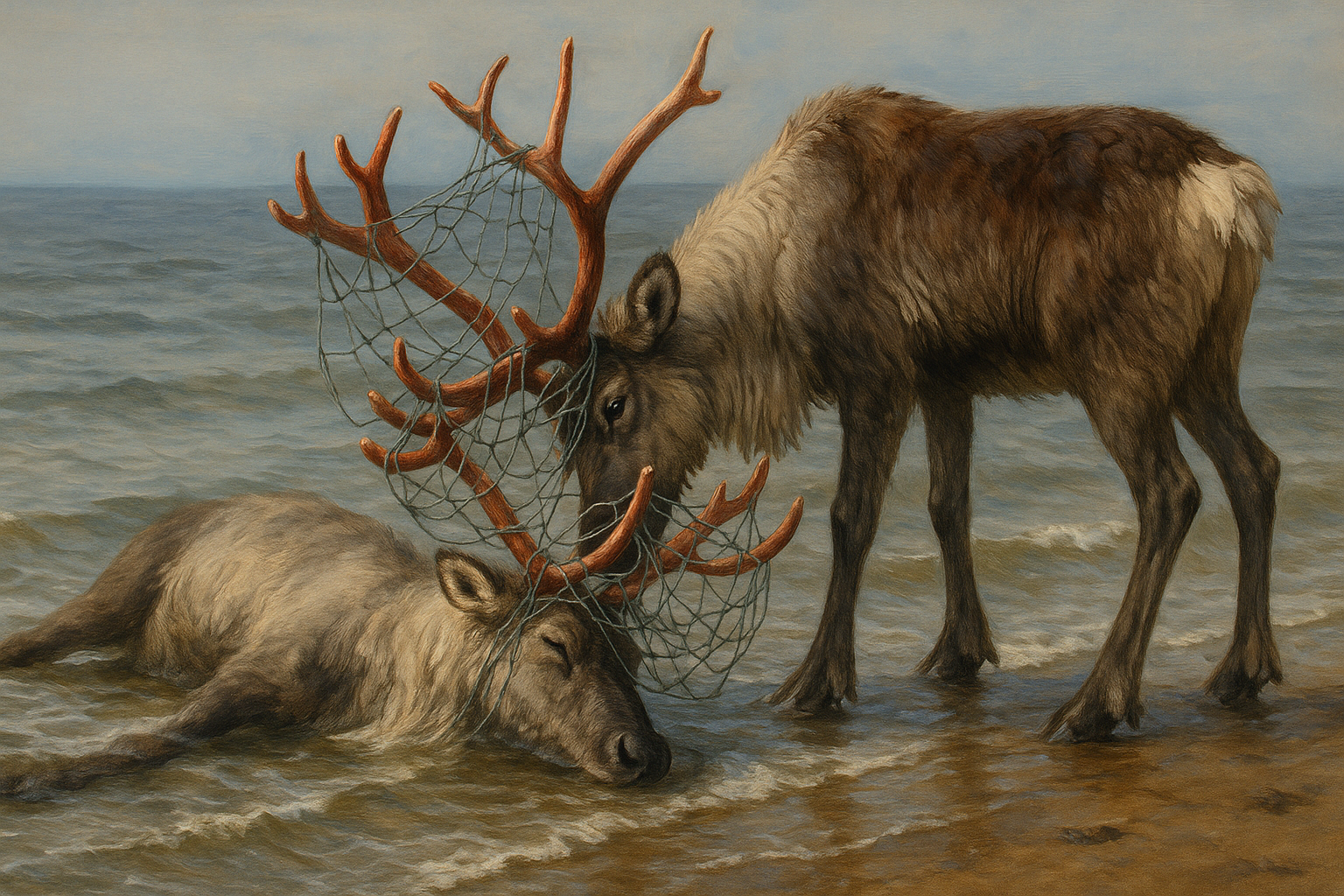
The Silent Catastrophe in the Arctic
Researchers are shocked by how frequently deadly incidents are being found on Svalbard, in which local Svalbard reindeer (Rangifer tarandus platyrhynchus) have died after becoming entangled in marine plastic debris — mainly fishing nets and ropes washed ashore.
On average, one dead reindeer is found for every 3.5 kilometers of coastline — and Svalbard’s coastline stretches for thousands of kilometers.
This is the first time that deaths of Svalbard reindeer caused by marine debris have been systematically documented, rather than treated as isolated or random findings.
Most of this plastic and fishing gear originates from commercial shipping and fisheries, and such objects can travel hundreds of kilometers before being washed up on Svalbard’s shores.
For reindeer that forage on seaweed or rub their antlers against drifting wood, these materials can appear as part of the natural environment, yet plastic can literally trap them and make free movement impossible.
When an animal becomes entangled — especially during fights or attempts to break free — it may die from exhaustion, starvation, or become an easy prey for other predators.
This is not only a problem for marine animals: these cases remind us that marine pollution intersects directly with terrestrial ecosystems, even in places where life seems far removed from human civilization.
Although the impact of plastic and other waste on marine life is well documented, until now there have been few studies examining how the same debris affects terrestrial animals in the Arctic.
The Arctic, often perceived as one of the world’s last untouched regions, is in reality a final destination for plastic waste arriving from across the planet.
The latest systematic data show that this impact can be direct and lethal not only for rare algae or birds, but also for one of Svalbard’s most important wild species — the reindeer.
Reindeer are not the only victims: researchers regularly find remains of whales, seals, birds, and other mammals linked to human-made debris. Even on mainland Norway, sheep are found entangled in fishing nets, proving that this problem is not isolated to the Arctic.
Analyses show that the most dangerous pollution comes specifically from fisheries, aquaculture, and shipping — not from household waste.
SALT.no Handelensmiljofond.no